
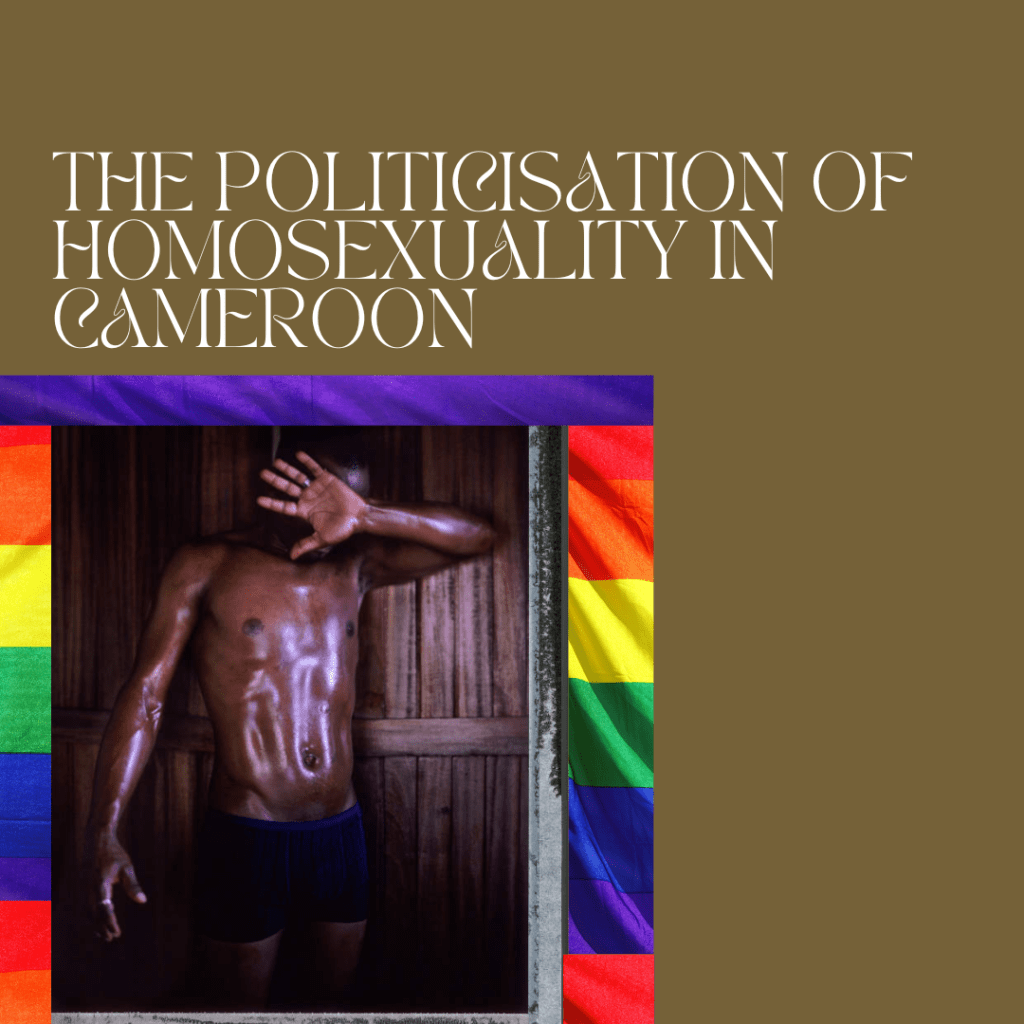
Issues of same-sex relationships, gay and lesbian rights are the subject of public and political controversy in many Cameroon. Frequently, these controversies receive widespread attention both locally and globally, such as with the Anti-Homosexuality law(347-1) which provides severe punishment for anyone having sexual relations with a person of the same sex with imprisonment for from 6months to 5 years with a fine of from 20000frs – 200000frs. These cases tend to be presented as revealing a deeply-rooted homophobia in Cameroon fuelled by politicians and cultural traditions. But so far little energy is expended in understanding these controversies in all their complexity and the critical role politics plays in all this.
What is their History
Over the past decades, Most politicians in Cameroon and around Africa have understood the existence of Homophobia in Cameroon and have been using It to their advantage. Knowing very well that most people say Homosexuality is antiafrican, most politicians have used this to their advantage to gain political popularity and go as far as winning elections. This is so because during their campaigns, they promise the masses that they will fight all western ideologies being imposed on them especially the subject or question of LGBTIQ persons.
The fact that Cameroon’s society is characterised by a strongly homophobic climate is unhelpful. Homosexuality is not only condemned by the media, but also strongly opposed by religious figures. Police officers and civilians are instigated to oppress the LGBTIQ community on the misconception that, as homosexuals are not recognised, they do not hold legal rights. This represents a clear breach of Article 2 of the African Charter on Human and People’s Rights, which states that the principle of non-discrimination provides the foundation for the enjoyment of all human rights.
The plight of LGBTIQ+ persons
Minorities are subjected to harassment, intimidation and even death by homophobic fanatics and conservative leaders as they try to impose their own interpretation of religious scriptures and punish those who do not agree with their interpretation of religious precepts and follow their rulings. Application of such measures has impacted the safety and security of the gender-minority community, as its members are forced to hide their identities, and cannot speak about their sexual orientation. Government agencies and civil society organizations do not advocate for the rights of this community, and deliberately avoid any discussion about them, fearing a backlash from forces of law and order who are ever ready to crackdown on any person who is pro LGBTIQ. A lack of public education and social awareness programs about the gender-minority community has contributed to the perpetuation of discrimination, hatred and bigotry toward them − a community that is part and parcel of the social fabric of modern Cameroon.
When Politicians are Involved
Over the past years, a handful of politicians have been accused of Homosexuality but these cases never saw day light as men in powerful places and connections freely walk away even after committing crimes that will send an ordinary man in prison, but the strong and rich however, walk free.
In the year 2006, Cameroon was rocked by an anti-gay crusade in newspapers that had accused more than 50 prominent figures of homosexuality.
The lists was however attacked by the then communications minister, Pierre Moukoko Mbonjo, one of those named.
He threatened legal action and warned that the newspapers risked breaking up families. “Whether heterosexual or homosexual, sexual intercourse takes place in an intimate environment between two persons,” he said.
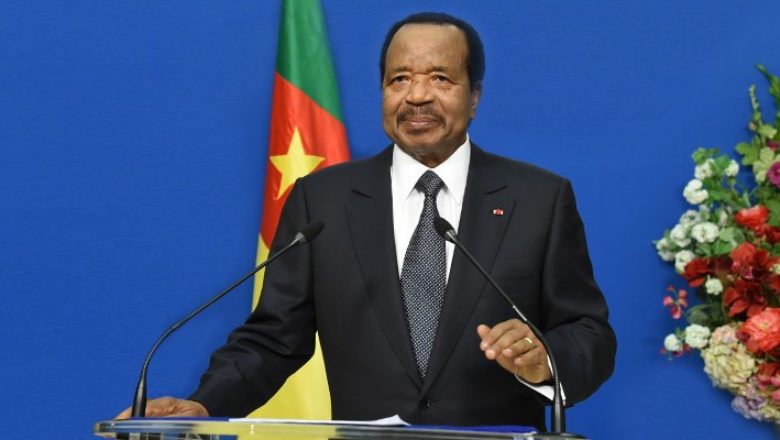
President Paul Biya stated at a news conference in Paris in January 2013 that “minds are changing” with regard to homosexuality in Cameroon, but he made no commitment to take concrete steps to decriminalize homosexual conduct.
What Message should we focus on?
A prominent LGBTIQ activist once said that those who are in prison today with charges of Homosexuality are the poor, as the rich pay their way out of crime while those who can’t afford money fill up prison cells, paying for crime committed by the rich. Politicizing Homosexuality and playing on the minds of the gullible has been a successful tool in which politicians who understand the political landscape in Cameroon have been using to gain political sympathy and popularity as they believe it is godly to fight homosexuals and ungodly to promote it thus making the question of decriminalization a farfetched reality.
What should we then Do?
Civil society organizations, activists and allies have been working tirelessly to educating the public about gay rights and trying to push forth the fundamental question of Human dignity and equality. Even though this efforst are appreciated, they however remain small as more ground work needs to be done on a daily bases and by seeking ways to making this question a national debate and pushing forward with the decriminalization process. More still needs to be done.

 Working for Our Wellbeing