
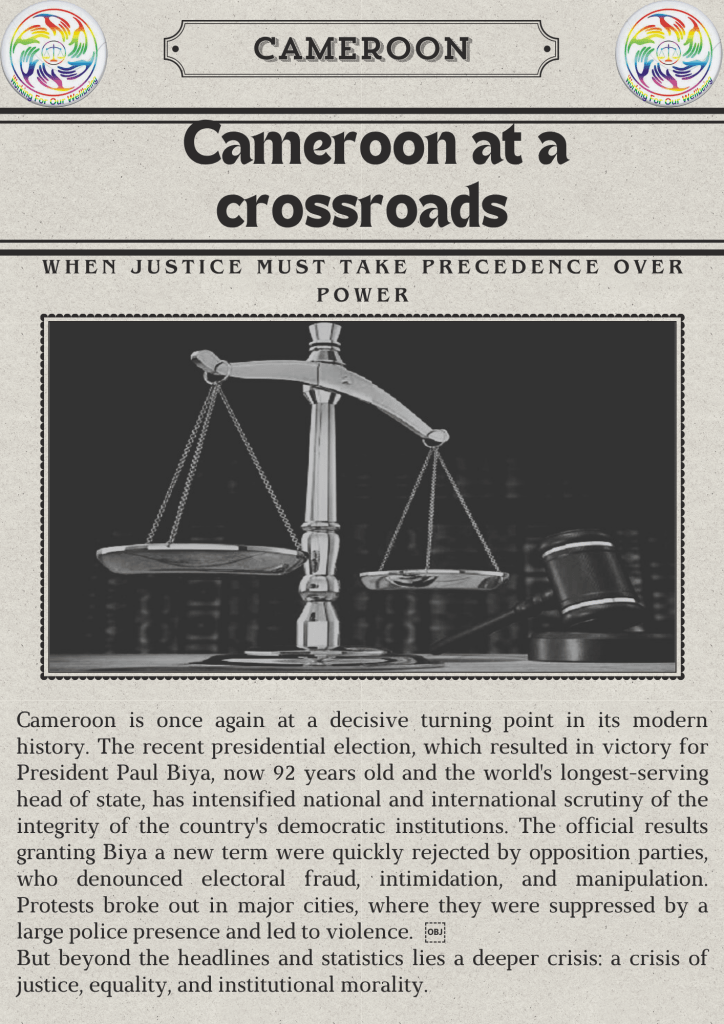
Cameroon stands once again at a defining juncture in its modern history. The recent presidential election was declared in favour of President Paul Biya, now 92 years old and the world’s oldest serving head of state has intensified national and international scrutiny over the integrity of the country’s democratic institutions. Official results granting Biya another term have been swiftly rejected by opposition parties, who allege electoral fraud, intimidation and manipulation. Protests erupted across major cities, met with heavy police deployment and reports of violence. But beyond the headlines and statistics lies a deeper crisis: a crisis of justice, equality, and institutional morality.
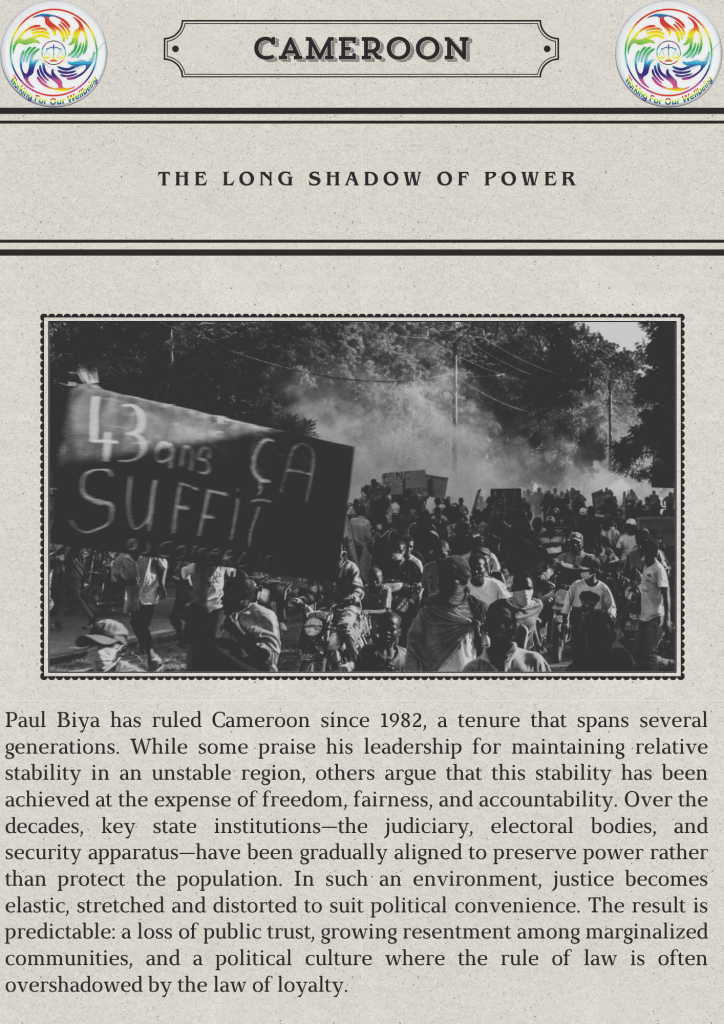
The Long Shadow of Power
Paul Biya has ruled Cameroon since 1982 a tenure spanning generations. While some hail his leadership for maintaining relative stability in a volatile region, others argue that this stability has been purchased at the expense of freedom, fairness and accountability. Over the decades, key state institutions the judiciary, electoral bodies, and security apparatus have been steadily aligned to preserve power rather than protect people.
In such an environment, justice becomes elastic stretched and bent to fit political convenience. The result is predictable: a loss of public trust, growing resentment among marginalised communities, and a political culture where the rule of law is often overshadowed by the rule of loyalty.
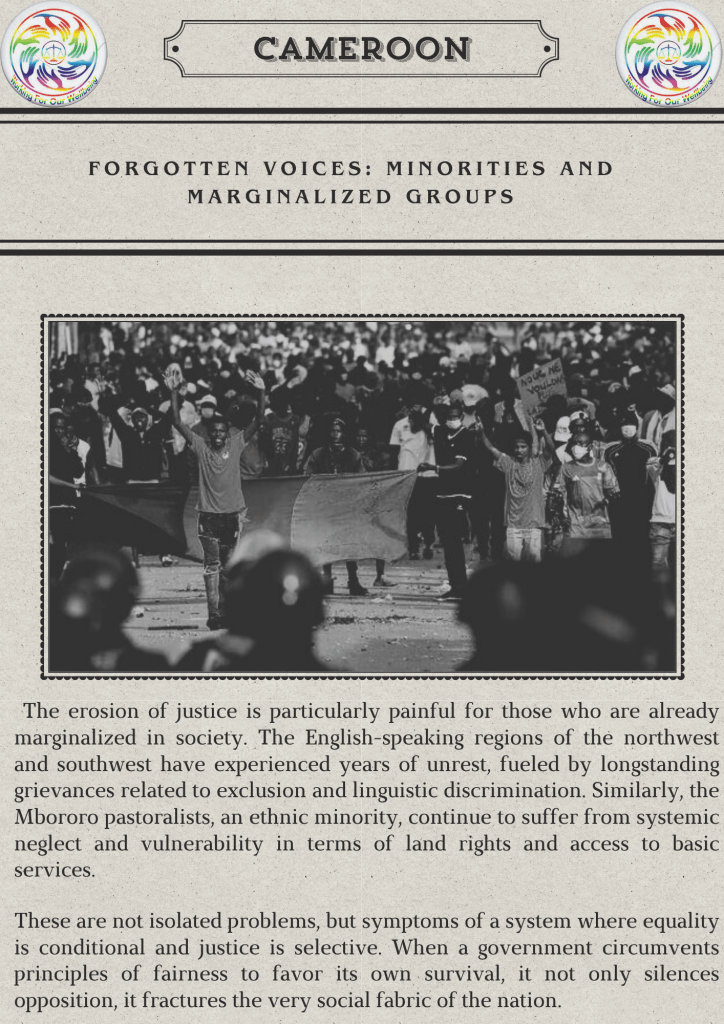
The Forgotten Voices: Minorities and Marginalised Groups
The erosion of justice is most painfully felt by those already on society’s margins. The Anglophone regions in the Northwest and Southwest have endured years of unrest, driven by long-standing grievances of exclusion and linguistic discrimination. Similarly, the Mbororo pastoralists, an ethnic minority, continue to face systemic neglect and vulnerability over land rights and access to basic services.
These are not isolated issues they are symptoms of a system where equality is conditional and justice is selective. When a government bends the principles of fairness to favour its own continuity, it doesn’t merely silence opposition; it fractures the very social fabric of the nation.
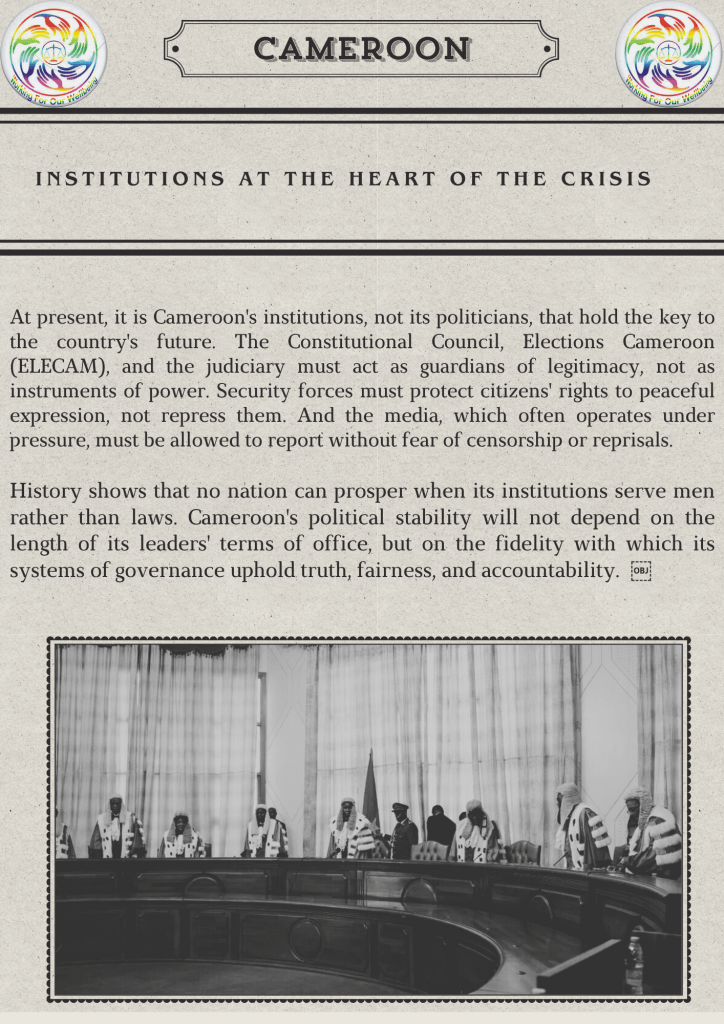
Institutions at the Heart of the Crisis
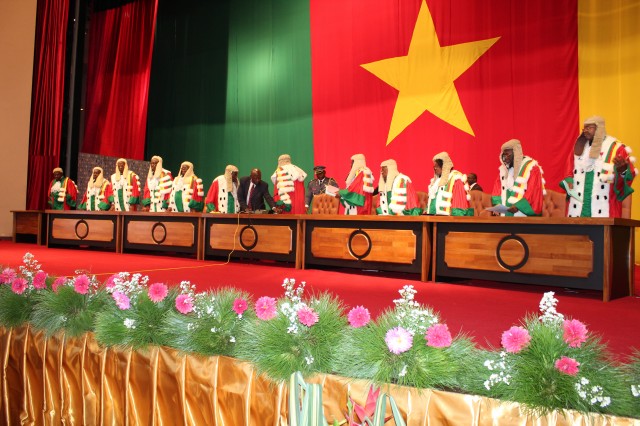
At this moment, Cameroon’s institutions not its politicians hold the key to the nation’s future. The Constitutional Council, Elections Cameroon (ELECAM), and the judiciary must act as the guardians of legitimacy, not the instruments of power. The security forces must protect citizens’ rights to peaceful expression, not suppress them. And the media, often operating under pressure, must be allowed to inform without fear of censorship or reprisal.
History shows that no nation can thrive where its institutions serve men instead of laws. Cameroon’s political stability will depend not on how long its rulers stay, but on how faithfully its systems of governance uphold truth, fairness and accountability.
A Call to Moral Leadership
Cameroon does not merely need political reforms; it needs moral renewal.
Justice must once again become the moral compass of governance. It must not be a privilege reserved for the powerful, but a birthright guaranteed to every citizen Anglophone or Francophone, farmer or herder, supporter or critic.
The time has come for Cameroon’s institutions to rise above partisanship and demonstrate integrity that transcends political allegiance. This is not a call for rebellion, but for responsibility for the restoration of a principle older and greater than any regime: no one is above the law.
The Path Forward
The international community, regional partners and civil society all have a role to play in urging transparency and dialogue. Yet, the true change must come from within. Cameroonians deserves institutions they can trust — courts that protect them, ballots that count honestly, and laws that apply equally to all.
Until that vision becomes reality, the country will remain caught in a cycle of crisis and compromise, stability and silence. But the spirit of the Cameroonian people resilient, hopeful and courageous continues to demand something better.
Justice must stand above power. Only then will Cameroon finally move from endurance to empowerment from silence to citizenship and from managed peace to true democracy.
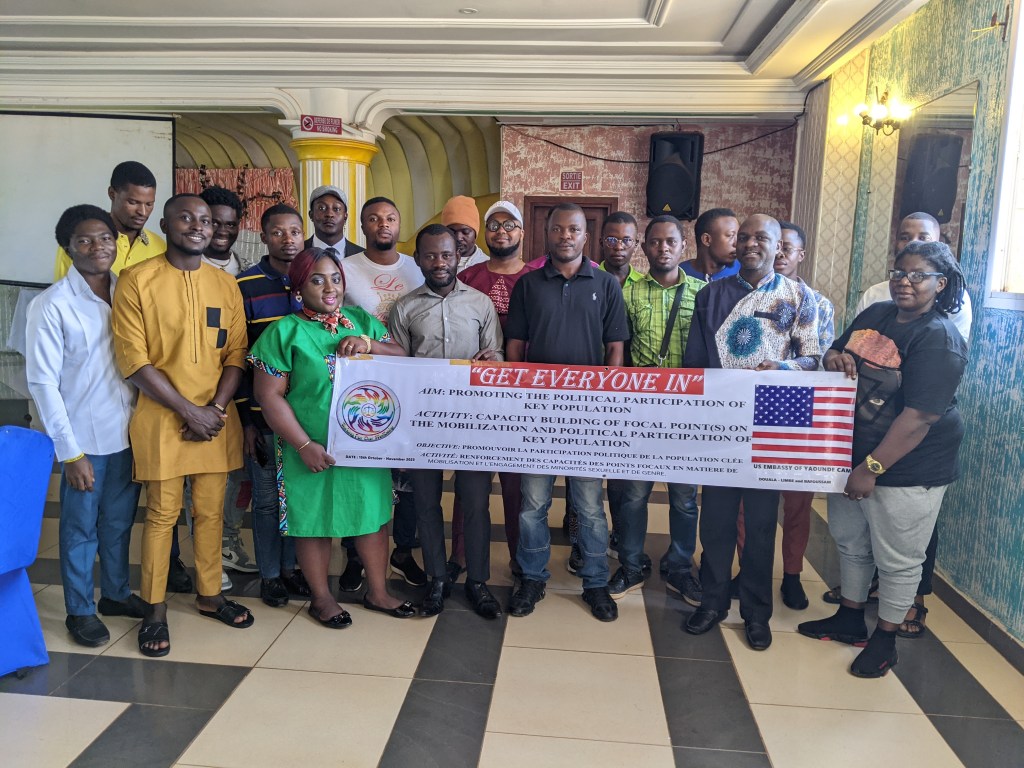
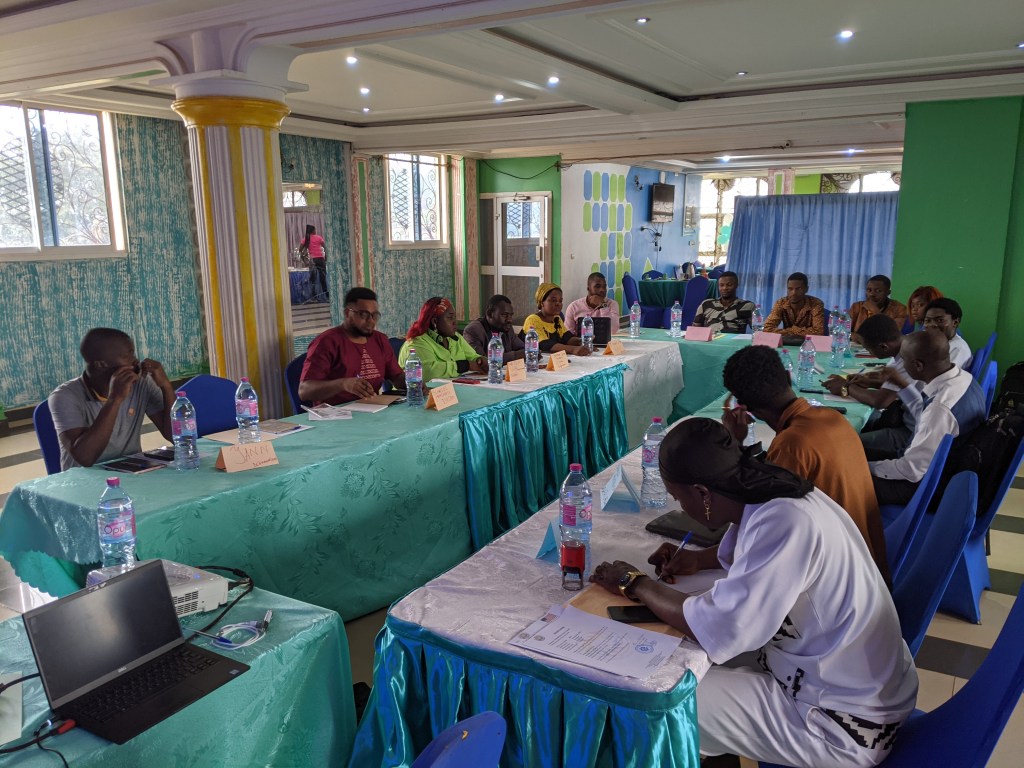


 Working for Our Wellbeing